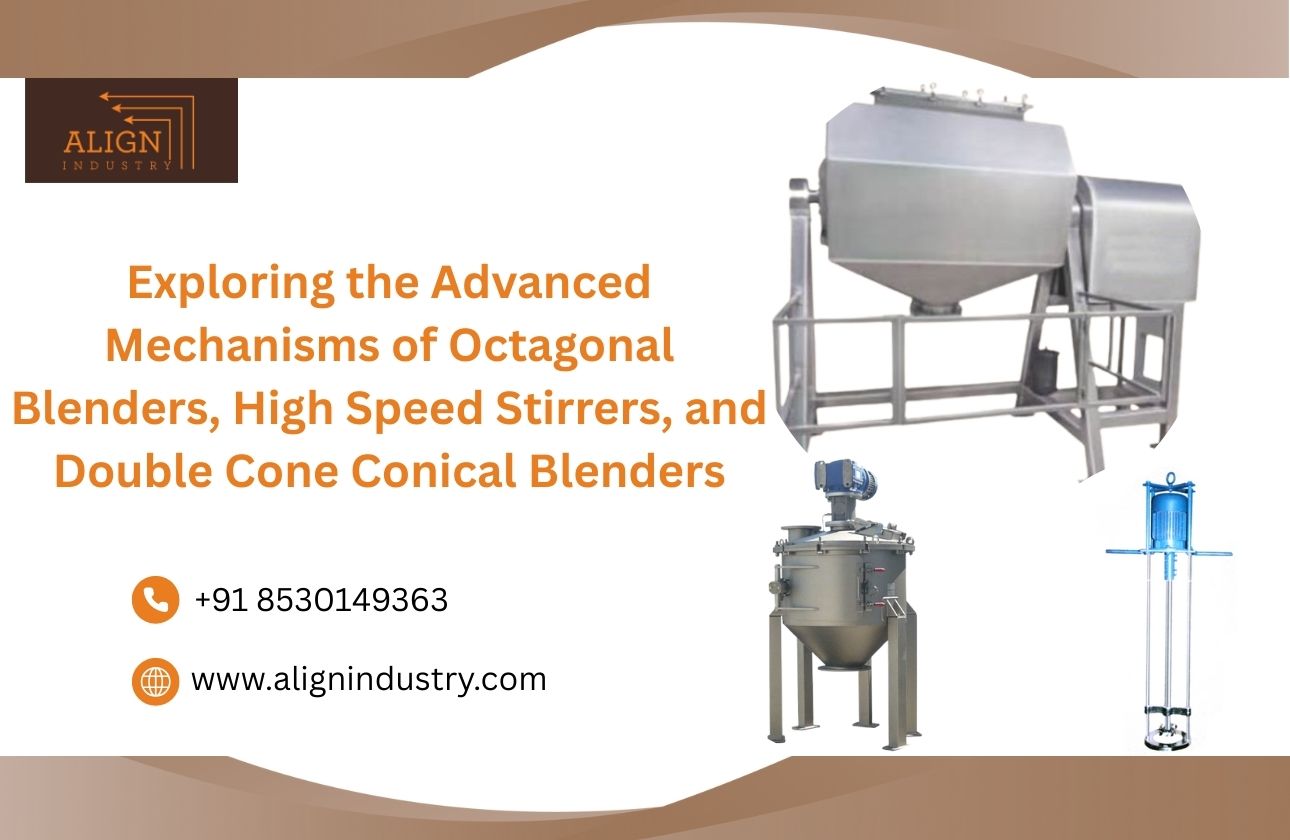
Exploring the Advanced Mechanisms of Octagonal Blenders, High Speed Stirrers, and Double Cone Conical Blenders
In the ever-evolving world of industrial processing, the right blending and stirring equipment can significantly affect the quality and efficiency of production. Today, we delve into three crucial apparatus: octagonal blender, high speed stirrers, and double cone conical blenders. Each serves unique purposes and offers specific advantages that are vital for consistent, high-quality product outcomes.
Understanding Octagonal Blenders
Octagonal blender are prevalent in industries that require gentle and homogenous blending of dry solids, especially in the pharmaceutical, food, and chemical sectors. Their unique eight-sided shape ensures thorough mixing without causing material degradation or excessive heat buildup which can affect sensitive ingredients.
The design advantage lies in the slow yet effective tumbling action, facilitated by the blender's octagonal shape. This ensures that every part of the material is uniformly mixed, an essential requirement for maintaining product efficacy and quality. Octagonal blenders are ideal for applications where particle integrity and blend uniformity are critical.
High Speed Stirrers: Engineered for Efficiency
High speed stirrer are indispensable in any application requiring rapid and intensive mixing, particularly in processes that involve emulsification, homogenization, or dispersion. These stirrers are known for their robust performance, achieving remarkable mixing consistency in a shorter time frame.
Equipped with powerful motors and various blade configurations, high speed stirrer ensure optimal shear rates, essential for breaking down solids and incorporating ingredients efficiently. Common in the paints, inks, and coatings industries, these stirrers handle high viscosity substances with ease, making them versatile across multiple sectors.
The Efficiency of Double Cone Conical Blenders
The double cone conical blender is another exemplary piece of equipment used widely for blending of granular materials. Characterized by its double cone structure, it facilitates a dynamic tumbling action, ensuring materials blend without dead spots or layering. The geometry allows for homogeneous mixing with minimal energy consumption.
Ideal for dry powder mixing, the double cone conical blender is preferred in food, pharmaceutical, and chemical industries where a gentle yet effective mixing process is necessary. Its excellent build quality and design versatility accommodate a variety of batch sizes and densities, making it a flexible option in manufacturing setups.
Choosing the Right Equipment
When selecting between octagonal blenders, high speed stirrers, and double cone conical blender, consider the material type, desired mixing speed, and final product requirement. Each of these apparatus offers distinct benefits:
- Octagonal blenders for gentle, slow blending of sensitive materials.
- High speed stirrers for intensive, rapid mixing with high shear requirements.
- Double cone conical blenders for effective dry powder mixing with low energy consumption.
In conclusion, investing in the right blending and stirring technology can vastly improve process efficiency and product quality. Navigate your next industrial mixing challenge with confidence by understanding and leveraging the strengths of these advanced tools.
Published on January 15, 2026 by Admin